Thursday, January 22, 2009

Drawings are coming along nicely...

Below is one of the latest of the D&RGW's C-19's. I'm doing several versions, not only from the D&RGW, but also locomotives from the Colorado & Southern; The Denver South Park & Pacific; the Florence & Cripple Creek, and the Rio Grande Southern.


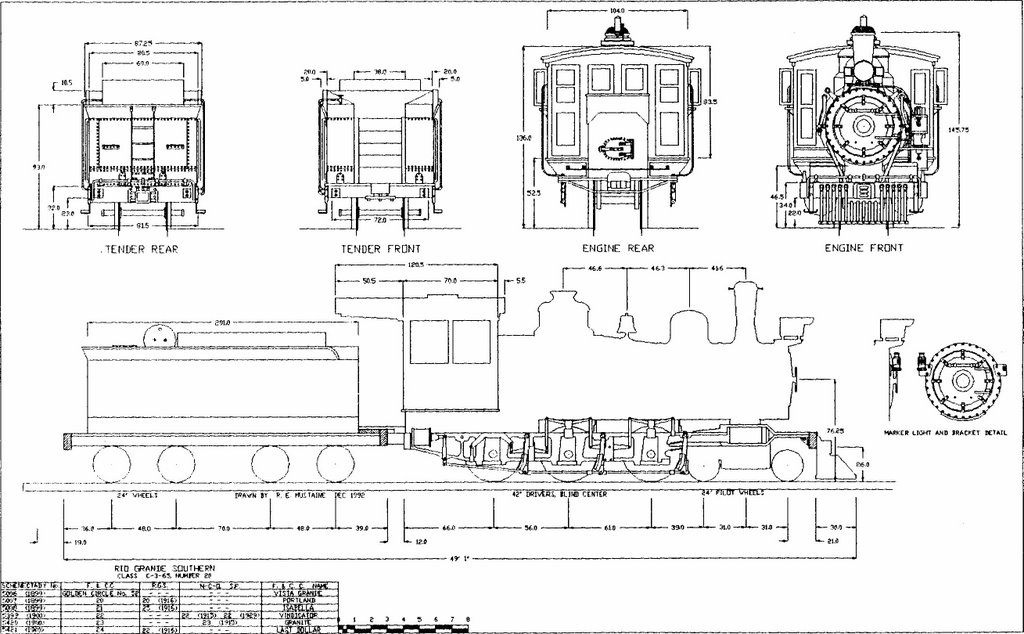
I am also doing end views, top and bottom views, dimensions and additional detail drawings for most of these locomotives.

It took years to gather all this information, so the drawings are a way not to lose all that data.

Sunday, December 14, 2008

TAKE ENOUGH PICTURES...


... And enough measurements, add one computer, a drawing program, a plotter that cost more than the computer and program combined, and you end up with pages and pages like the one below:


That's a "b" sized printout of the frame center section of K36 # 487. Measurements and photos were taken in May 0f 1994, when 487 was getting its' main drivers re-worked.

And there they sat(below), after rework.

C&TS RR #463, THE GENE AUTRY ENGINE


Lots of folks don't realize that the C&TSRR locomotive #463 is with us today because of the "singing cowboy" movie actor Gene Autry. Way back when, Autry purchased 463 and at a later date, donated it to the village of Antonito, who put it on display... sort of.

I recall when - after the Cumbres & Toltec was up and running - the village decided they could get a piece of the action by having 463 refurbished and put into service.

Turned out - among many other problems - that the boiler needed re-fluing, a $60,000 job all by itself, so the idea died the death of many a locomotive refurbishing project. Then followed a long period of chit-chat between the C&T and Antonito, after which 463 finally ended up in the Chama shop.

Wife and I went to Chama and got a few photos of 463 while it was being re-built. I say a "few photos" because you never get enough.

Everybody has photos like the one above, but I like the ones that take some effort to get, particularly since I use them to make scale drawings.

For example, a bit of brake hanger detail:


Notice that this main driver has a cast-in counter weight, in addition to the outside-frame counter weight we're all familiar with.

Or the front flue sheet:


Note my ever-present yard stick. Kindly ignore the southern exposure of my north-headed wife.

And of course, the obligatory souvenir of the big day:

Sunday, December 07, 2008

THE PULLMAN GLORY DAYS

Shown here are the front and back covers of a Pullman advertising brochure printed in 1948 by the Pullman company. It is a 38 page booklet describing various accommodations that were provided on the streamliners of the day.


Some of the personal services and conveniences listed are:

The cars are temperature-controlled and air-conditioned. If you had a private room, you could control it yourself.

Your room was kept clean and neat by Pullman's expert housekeepers.

If you wanted an extra pillow or blanket, the porter willingly provided one... no charge.

Your shoes were shined while you slept.

You could have a table set up in your private accommodation, just ask the porter.

Below are renderings of one of the many Private rooms provided:


(left-click to enlarge)

Accommodations offered included:

Section with upper and lower berths at night.
Duplex-Roomette.
Roomette type A.
Roomette type B.
Duplex-Single Rooms.
Connecting Double Bedrooms type A.
Double Bedrooms type B.
Connecting Double Bedrooms type C. (shown above)
Connecting Double Bedrooms type D.
Bedroom and Compartment.
Compartment.
Drawing Room.

Those were just the private accommodations. Add to that, the Observation Car, Dining Car, Lounge, ladies dressing room, Men's dressing room... pretty nice.

It may have been 1848, but they knew how to travel cross-country in style and comfort. Today's public transportation conveyances pale by comparison.

Friday, December 05, 2008

FROM DEEP IN THE FILE CABINET

Below is a Denver & Rio Grande/Western Pacific schedule in use during July-August of 1917.


Found this item at a small town Texas auction and got it for ten bucks. Had it been a Colorado town, I'll bet ten bucks would have only started the bidding.

Below is a part of the schedule through portions of Nevada and Utah.


A D&RG modeler wanting some unusual names for for water stops can find a host of them here... Pronto, Pardo, Tobar, Shafter, Silver Zone.

The historical information about each stop is fascinating and in many cases, most likely long forgotten data. For example, Shafter had a RR link to Ely, Nevada, a 140 mile leg, and made a connection with the Nevada Northern Railroad.

Look at the notes about Delle. Now you know where Up Skull Valley was, and why it was named that way.

(Left-click on graphics to enlarge)

Monday, December 01, 2008

THE GEORGETOWN LOOP HIGH TRESTLE

One hundred years ago, Mr. George Walter Webber of Gunnison, Colorado, got this postcard in the mail:


Imagine that... your name and city is all it took to get your mail.

(left click on postcard images to enlarge)

The above postcard was made by the same manufacturer, both embossed and colorized, but has no postmark or address on the back. The high trestle is card number 118, and the loop is card number 108.

I can only guess how both cards got into the same collection. Whoever sent the high trestle card to Mr. Webber later hand delivered the loop card to him - saving a penny for a stamp in the process - but still having one postmarked card as proof of having been there.

Sunday, November 09, 2008

THE NEXT DRAWING PROJECT


This is the index page of the Rio Grande Southern's Passenger Equipment folio. At the time of this folio the RGS had a total of thrirteeen passenger cars, so the task will take a relatively short time.

Since I do have a collection of period photos of various RGS rolling stock, I have the opportunity to cross-check and add to some of the folio's original drawings with details supported by the photos.

I had forgotten that I had this folio. It sometimes is quite surprising what I have gathered on narrow gauge railroads. Rummaging through my boxes of stuff is a lot like having a surprise birthday party.

Ever heard of the Sante Fe Central Railroad?

Wednesday, October 29, 2008

WHAT I'VE BEEN UP TO THE LAST FEW MONTHS

Below is one of my drawings I've been creating on D&RG passenger cars. I now have the entire September 1904 portfolio 6 re-drawn on my computer in the format shown.


I'm now working on detail drawings such as heaters, window and door latches, water containers, coal bins, various types of seats and chairs... All the typical accessories and equipment found in a car but hardly ever mentioned, much less drawn to scale.

I have a large collection of photographs I've gathered over the last fifty years, but it seems I can't use them in my upcoming publication since the original photographers - whoever they may have been - can't be found, or credited. Hence the drawings.

The completed drawings save much of the information and details that could otherwise be lost.
THEY DON'T ENGINEER THINGS THE WAY THEY USED TO


This picture is of a door lock on a D&RGW freight car. I'm still trying to figure out exactly how it all works. Anybody got a reasonable explanation?

Friday, April 14, 2006

POSTCARDS OF TRESTLES AND BRIDGES

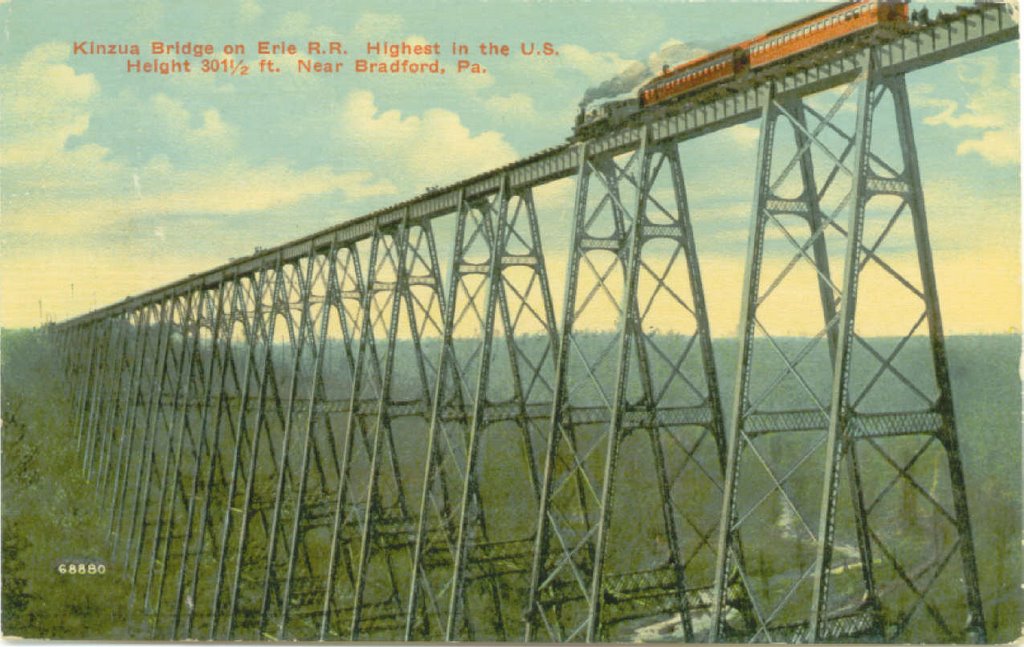
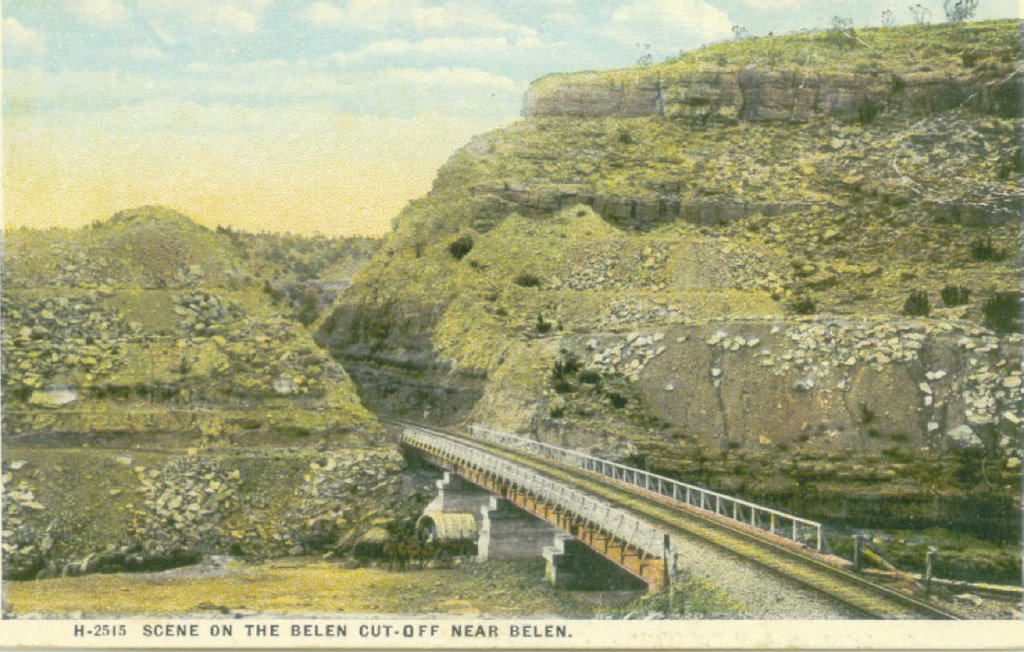
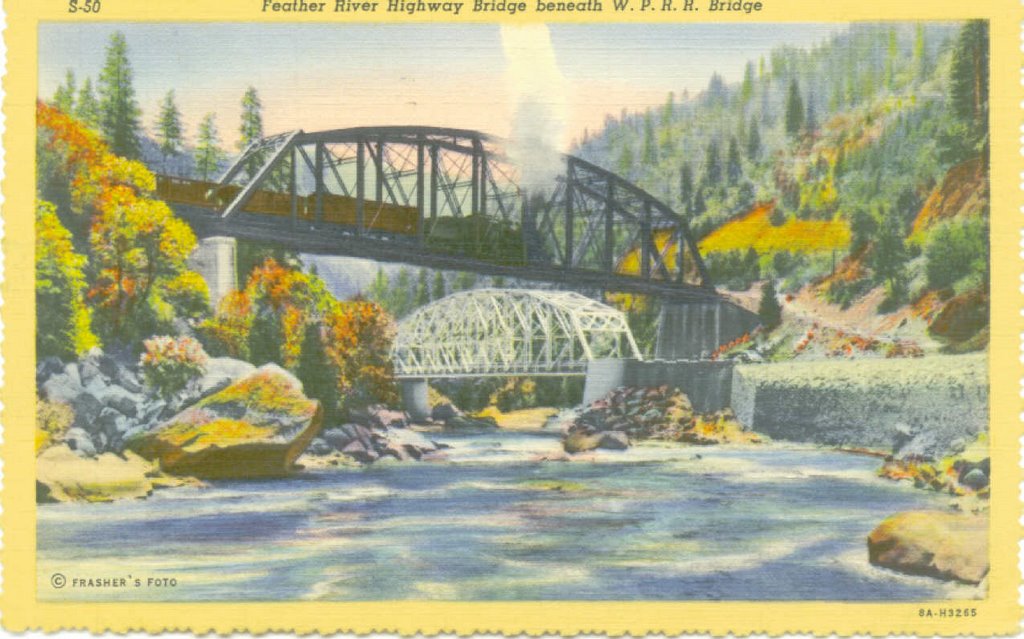
America's railroads, over the years, have built some astounding bridges and trestles in the process of getting from point A to point B. Some were built to last a thousand years, but others were spindly, rickity, temporary things that often collapsed, killing many folks on the process.

Just look at this one... it amazes me that people had the internal fortitude to even walk out on something like this, much less ride in a train consist weighing many tons. It's at least built of steel, so the chances of getting across alive was probably pretty good.
. This post card was unused, so I have no date to give you as to when it was purchased.

Look at this one. I'll bet a lot of railroad buffs will think this is a view of the famous AT&SF bridge across Canyon Diablo, but it isn't. It's a bridge of similar construction called "The Great Trestle" near Clinton, Mass., a short distance downriver from the Metropolitian Dam. It was built by the Central Massachusetts RR.


I like the below card for several reasons. I've been there, it's been postmarked, it actually has a covered wagon traveling under it, and most of all, it has a message to "Dear Data". And here I thought that Data never left the USS Enterprise.


See? It actually says "Dear Data".

You'd think that out in the middle of nowhere there would be more than room enough so stacking bridges would not be necessary, but nooooo.... here's proof positive the exact opposite is the case.


It's a fairly recent card, dated 1944.

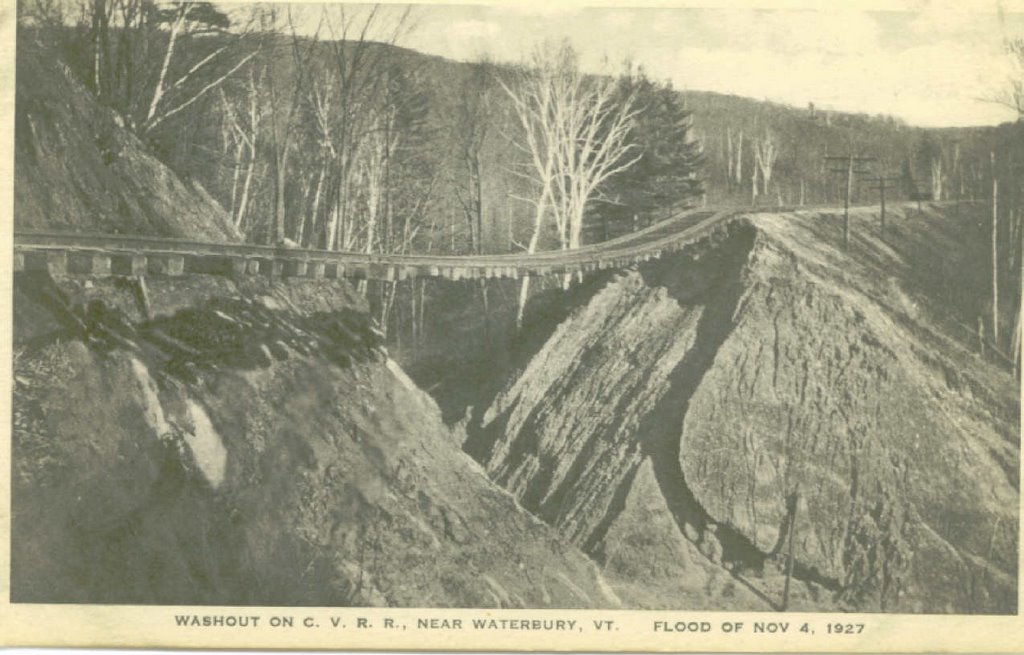
Somebody certainly overlooked something when they built this one: "It just don' rain that much round heah..."

Bet you some of the locals at the time were daring each other to walk across the remains.

Bridge? What bridge? Must of been a day to remember...


I have stacks of postcards of bridges. It is difficult just to pick a few out. I also (re)discovered that I have postcards of stations, many long gone, cards showing the devastation caused by bombing in WW1, quite a few cards of the San Francisco fire, and other disasters around the world.

I'll pick out a few and post them... Eventually.

Thursday, April 13, 2006

NARROW GAUGE IN CALIFORNIA

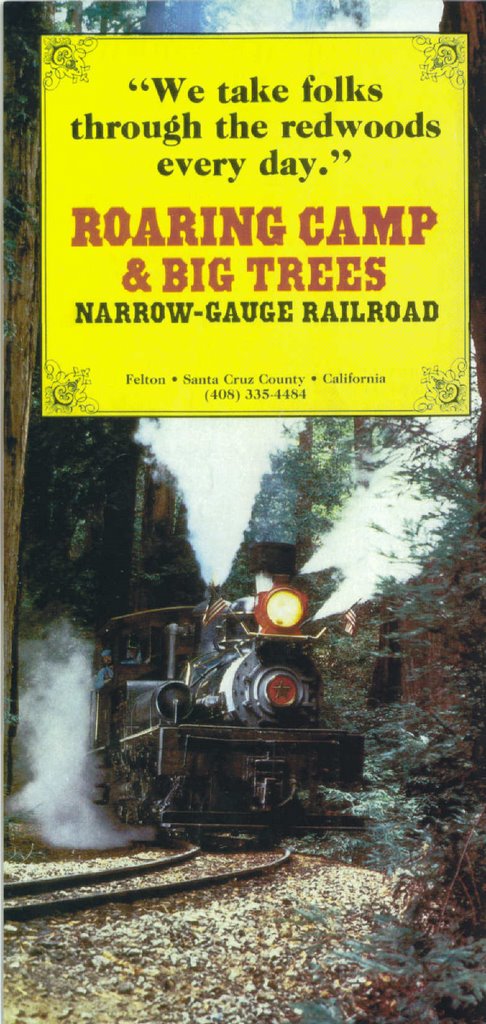
Tucked away in California's redwoods is a fascinating little narrow gauge railway once operated by a logging company. The Roaring Camp and Big Trees Narrow Gauge Railroad allows you to tour a virgin forest of gigantic Sequoia Sempervirens (Coastal Redwoods), the first privately purchased in 1867 to be preserved for posterity. Interestingly enough, if memory serves correctly, this is the very place that Mark Twain wrote about the famous "Calavaras County Jumping Frogs".

You can also take a self-guided tour almost a mile long (.8 miles), a nature walk through the adjoining Henry Cowell Redwoods State Park. The Roaring Camp & Big Trees Narrow Gauge Railroad operates every day, rain or shine, except Christmas.

When I was there, they had three unique locomotives that were once used in logging. Number One, a 1912, 42-ton Shay, number Seven, a 1910, 60-ton Shay, and Number Two, a Heisler called "Toulumne". Toulumne was the locomotive power for our trip that day.


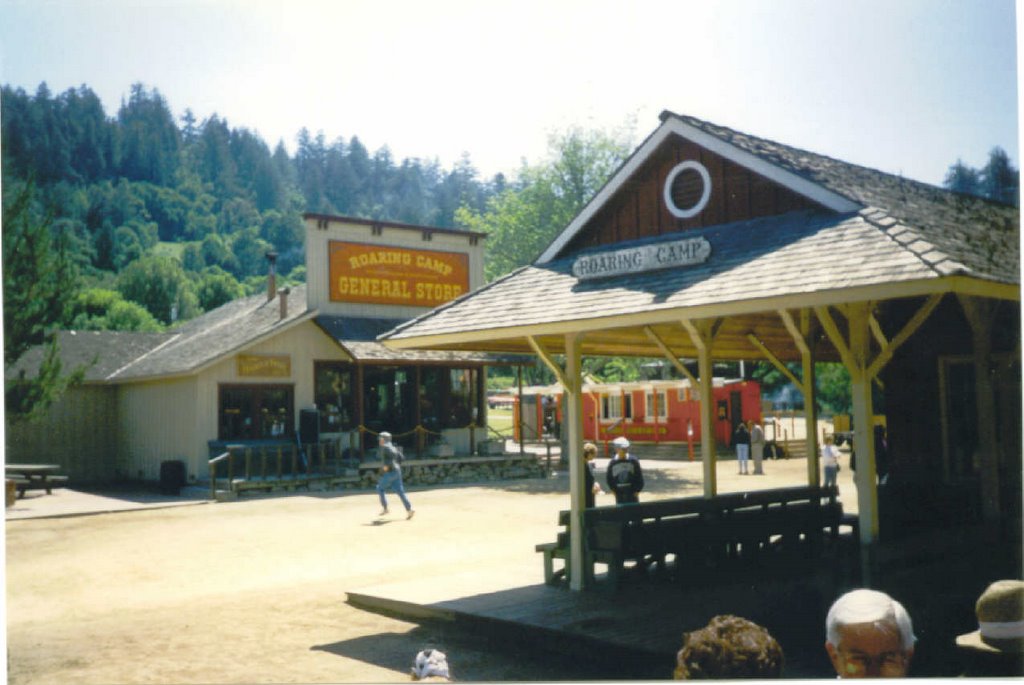
Below is a snapshot the "Town" center, showing the merchandise store and a bit of the depot.


To this day, I'm still wondering what the grey-haired lady in the center of the street was running to... or from.

Unfortunately, when I was there, one of the trestles had been recently hit by lightning, caught on fire, and was mostly destroyed, so the consist had no option but to run up the grade and then back it's way down.

When I asked about the rebuilding of the burnt trestle, they were not very encouraging about it. Seems that modern building construction requirements did not have 19th century wooden trestles in mind.

I wonder if they ever got past those legal hurdles and rebuilt the wooden structure as near as possible to it's original design, or if they replaced it with some sort of acceptable steel structure, or if it has not yet been replaced.

None the less, you can see from the photos that it was a beautiful day for a ride through the gigantic Sequoia Sempervirens.

Go visit this little jewel hidden away in the woods, before one of those California earthquake puts it put of business.

Wednesday, April 12, 2006

A VERY LONG JOB

Over the years I have taken many trips to the C&TS RR at both Chama and Antonito, to take measurements and photographs of the k36, with the intention of producing the most accurate drawings available of the locomotive. That's a tall order. I even visited the K36 displayed at the Royal Gorge in Colorado several times, engine number 486, until it was sold and moved to Silverton.

There is a host of details that are never usually seen and to get the needed information I've had to go when an engine was torn down for repair and refit.

Below are some K36 elevations... so far, and far from finished.


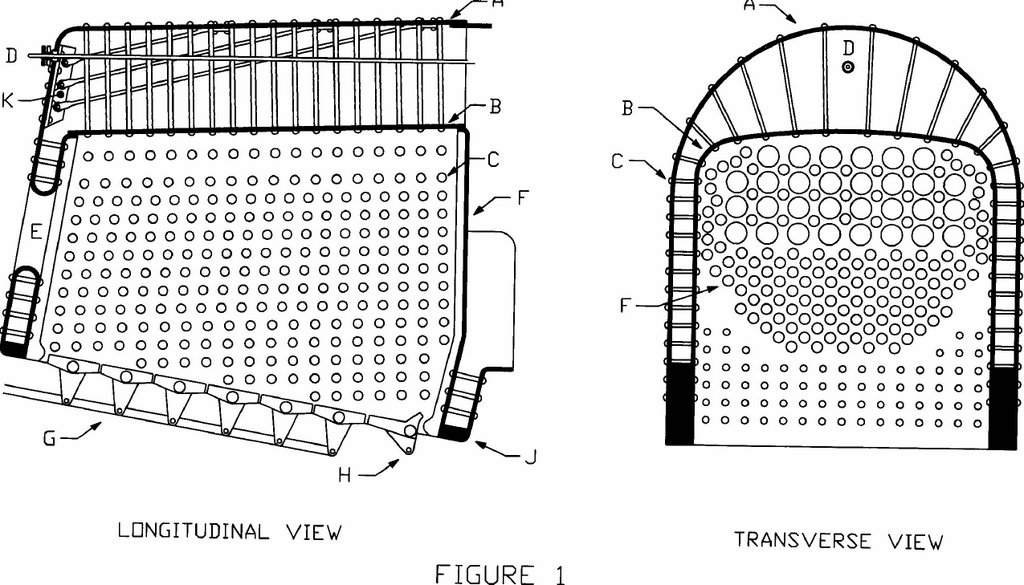
Supposedly easy to get details of the firebox (below) have sometimes taken long trips and days of effort.


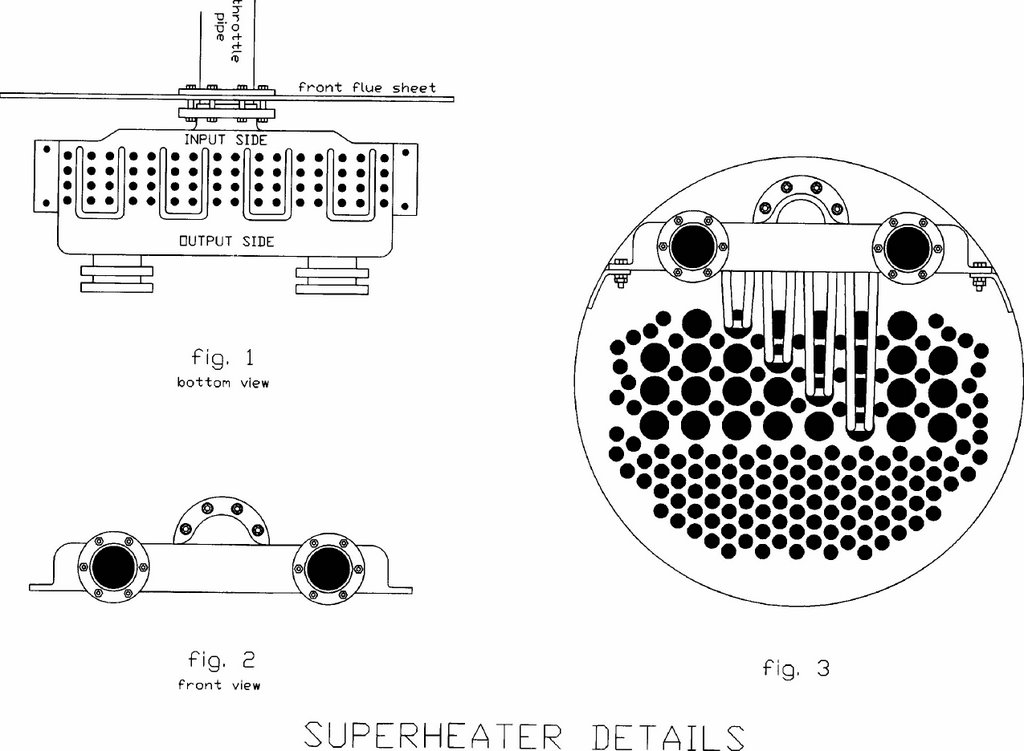
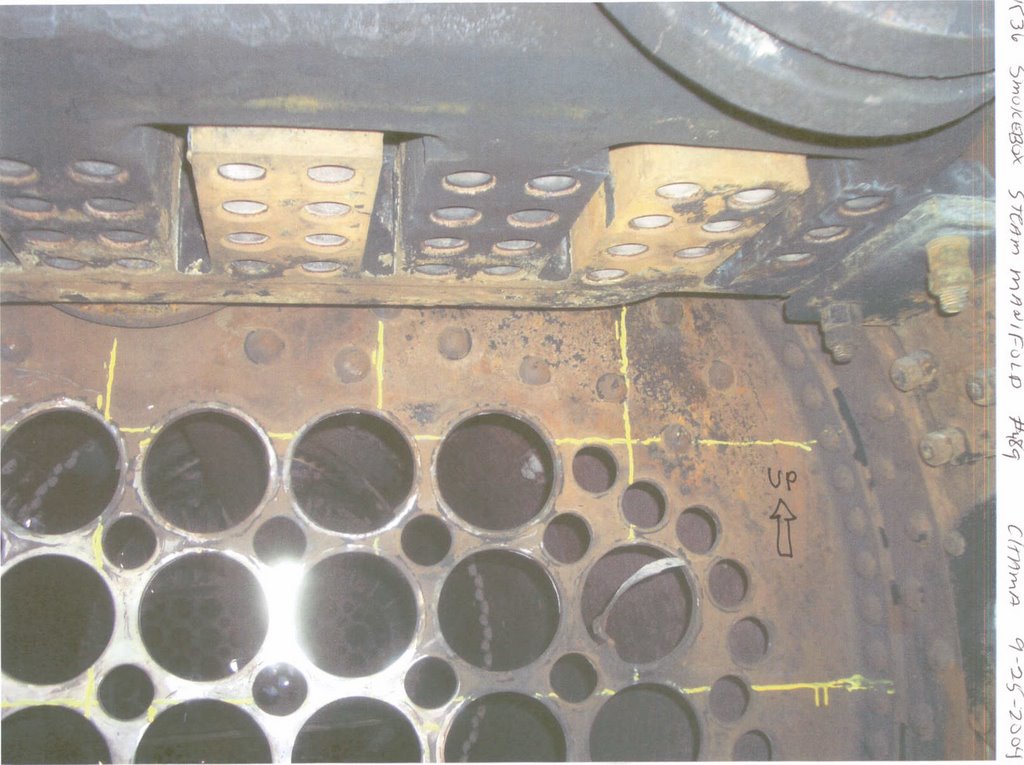
Details of the superheater manifold and piping (below) can only be collected when a K36 is in the shop, opened up, and cold.


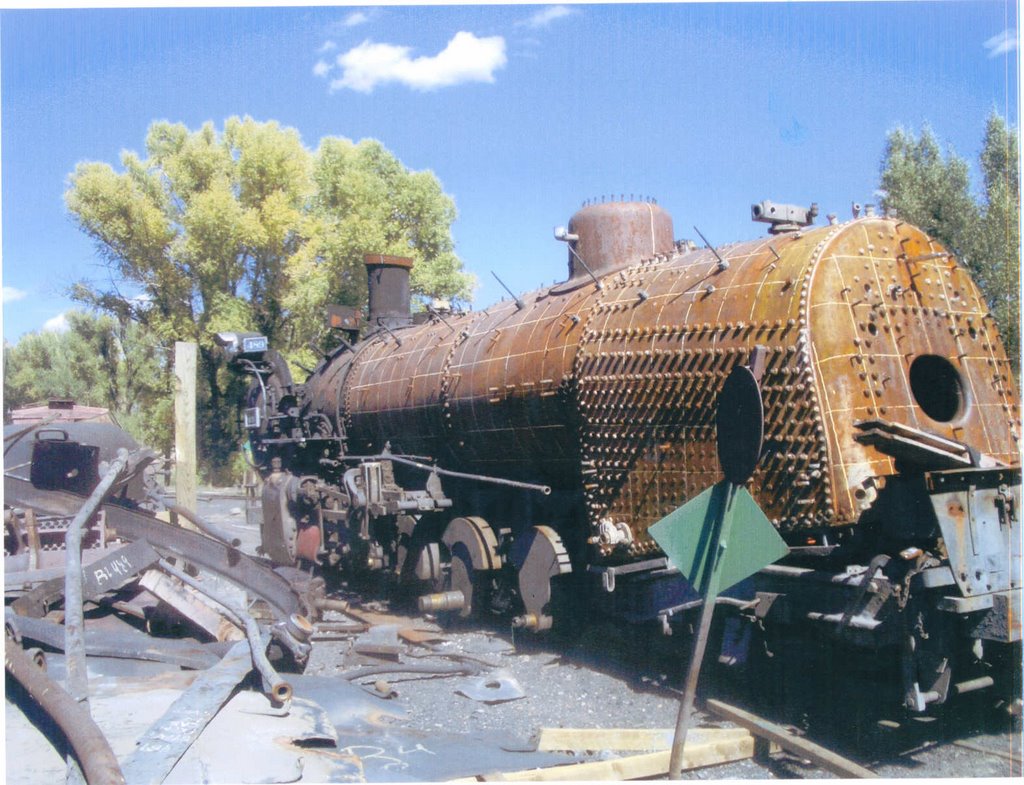
They say the "devil is in the details"... no kidding! There are things on these locomotives you couldn't possibly imagine. But, when you find a K36 in the shape seen below, it becomes a lot easier to get the measurements to the decimal point I need, .0312, or 1/32".


When your bumping your forehead up against the superheater manifold while deep inside the smokebox as shown below, it allows for some pretty accurate measurements.


See those horizontal and vertical lines on the boiler and firebox? I suspect some modeling company had sent one of their people to take measurements for a possible K36 model. I recall that when engine 463, the "Gene Autry" engine was acquired, I spent a bit of time talking with a guy from one of the modeling companies who spent a total of thirty days in Chama getting measurements. The guy was so secretive about his work you'd of thought the CIA had sent him. Yes, it does take a lot of time and money to do this, so the results can be valuable to somebody.

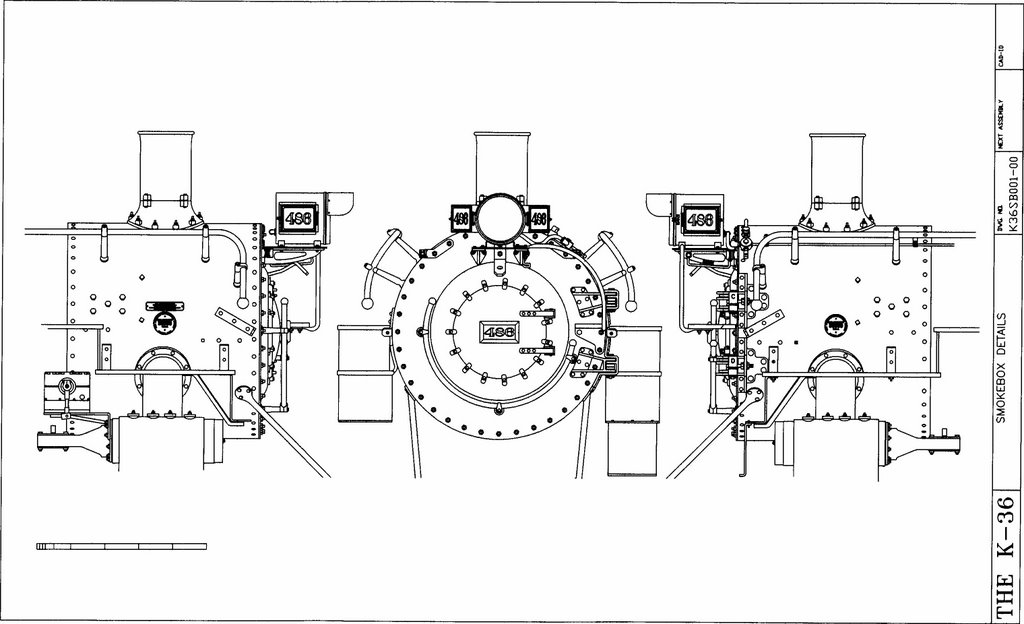
The below drawing of a typical K36 smokebox is about as far as I'm going to go with accuracy and detail, particularly if I ever hope to finish. Keep in mind all this has also been drawn and rendered as a 3d model, so everything had to fit. The hinges were a nightmare to do in 3d.


Even the headlight (below) required measuring and re-measuring, checking and re-checking.


I've learned one thing with all this photographing and measuring, there's no two K36's that measure the same just about anywhere you chose to look, so I've been drawing a "typical" K36, because I just won't live long enough to do each one separately, and lordy... who would want to?

Sunday, April 09, 2006

DRAWINGS AND STAMPS

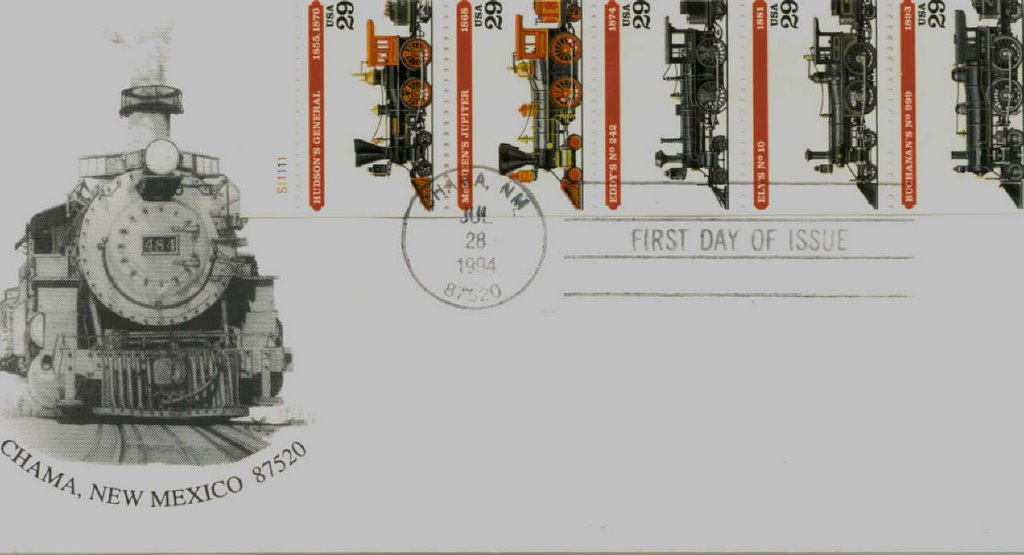
I did a charcoal sketch of the Cumbres & Toltec's K36 locomotive number 484 some time ago, and in due course it was selected by the National Rocky Mountain Narrow Gauge Museum for a promotion during the release of five stamps issued by the US Post Office, featuring old-time steam locomotives. The drawing ended up as a cachet on an envelope created for the "first-day of release" event in Chama.

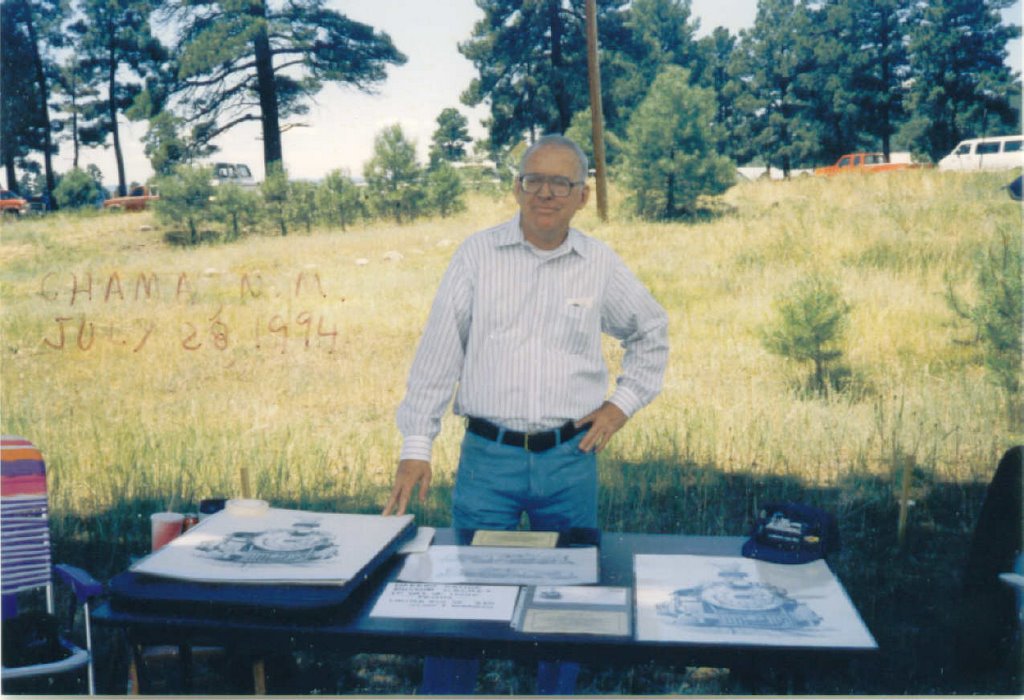
Chama is the New Mexico home base of operations for the C&TS RR, so the local post office became the center of action on that day, July 28, 1994.
Left click on the drawing for a larger view.


Here's what an envelope -- with all five stamps -- looked like:


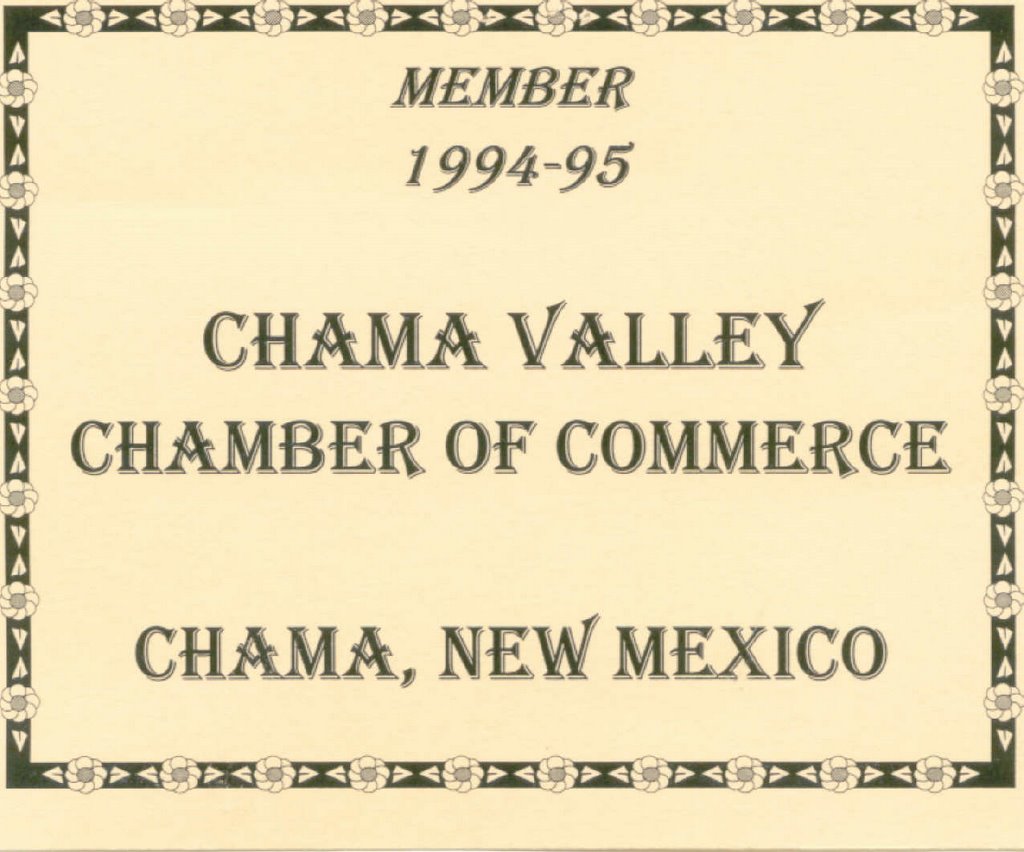
My wife had convinced to have some prints made of the sketch, so I had 250 prints done by a local print shop, and I took them to Chama with me on the big day. In order to legally sell the prints, I had to join the Chama Chamber of commerce and get a one-day peddlers license. Here's my certificate:


Armed with this enabling piece of paper, I set up a folding table out in the weeds and trees -- along with a bunch of other peddlers -- and ended up selling signed and numbered prints all day long. Didn't sell them all though, the remainders are stored away in a closet someplace. The below shot shows Mr. bigshot artist/businessman during his one day of glory.


The prints came with a Certificate of Authenticity, a letter from the Narrow Gauge Museum and a copy -- clearly labeled "copy" -- of an envelope with the cachet and stamp.


If you want to read what they say, you're going to have to buy a print.

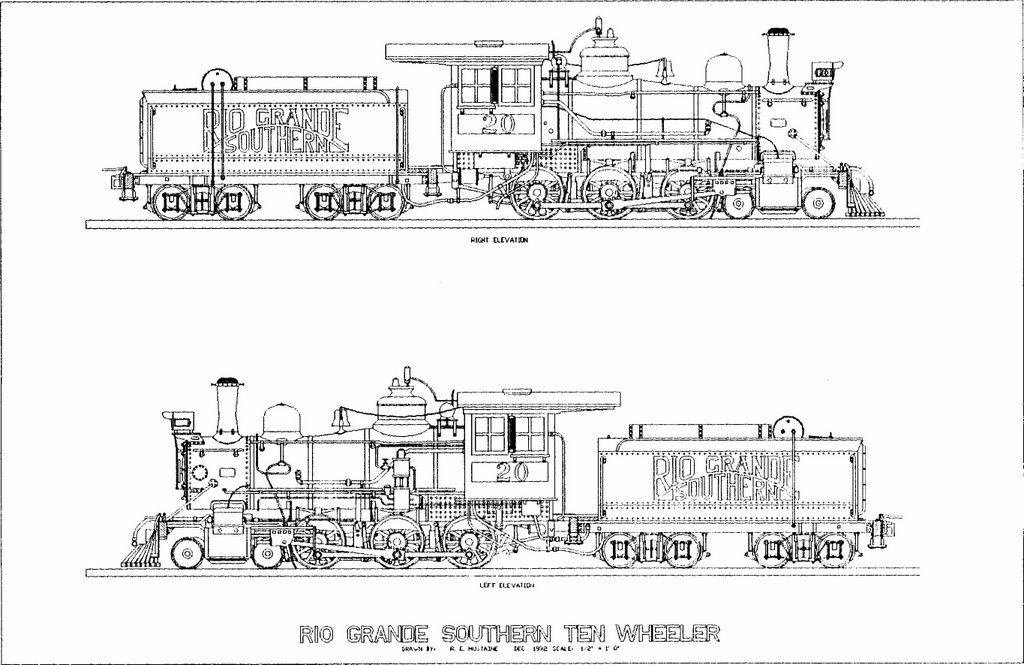
I also peddled a few of my 1/4" scale drawings of the Rio Grande Southern's 10 wheeler. These were 11 x 15 and totally encased in plastic, so a modeler, using it as a bench reference, wouldn't ruin the drawing (accidentally) with spills of glue, or paint, or coffee, or beer.


Turned out to be a fun day. Weather was fabulous, met lots of new friends and ran into a few old ones. Well worth posting about.

Saturday, April 08, 2006

THE CUMBRES & TOLTEC SCENIC RR

The Cumbres & Toltec Scenic Railroad is a narrow gauge steam line that was once a part of the Denver and Rio Grande Western Railroad, this particular part serving the rich mining camps in the San Juan Mountains. It runs from Chama, New Mexico, to Antonito, Colorado, over 64 miles of it's original roadbed. It was jointly purchased by the States of New Mexico and Colorado when the Rio Grande RR decided to scrap it, and now operates as a tourist attraction.

And what an attraction it is! Sixty four miles of true American history, climbing up to an elevation of 10,030 feet, skirting along the edge of thousand-foot deep gorges, chasing mountain lion and bear off the tracks on an almost daily basis. It is a time machine that takes you back over a hundred years to the days of the old west, when the only way to go anywhere was by horseback, stagecoach, or the train.

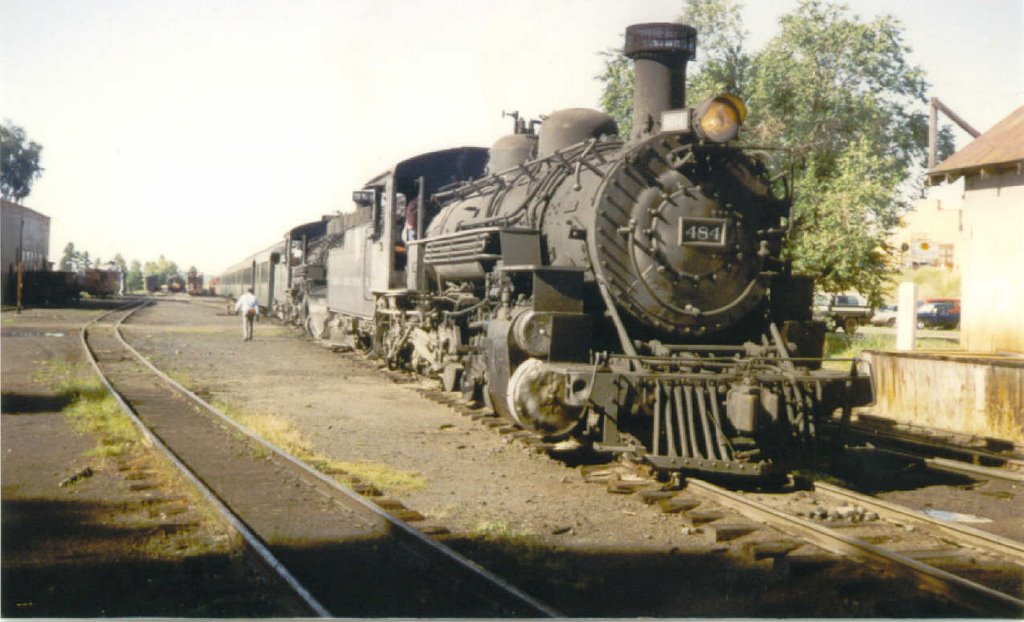
My family and I made a recent visit (not the first one) to enjoy a day out in the Rocky Mountain wilderness. The below photo is of the double-header (two locomotives) that was scheduled for the days run, the first leg being up the four percent grade from Chama to Cumbres Pass at 10,030 feet.

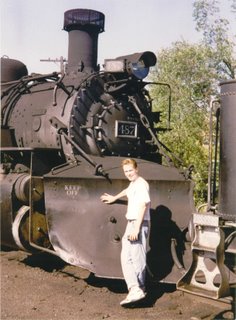

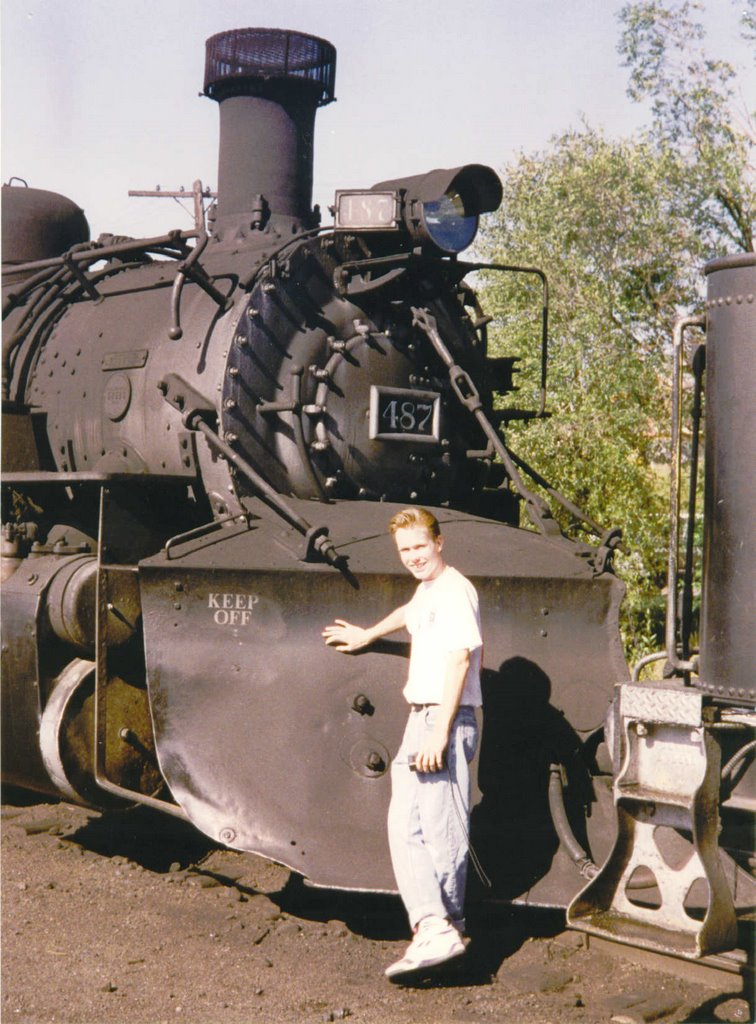
This shot shows my son checking out the snow plow on engine 487. Our consist on this day were engines 484 and 487, seventeen passenger cars and one gondola. Engine 484 was a "helper" and was to be disconnected from the consist when we reached Cumbres pass. It would then return to Chama for other duties.

Immediately after the crest of Cumbres Pass is "Whiplash Curve", the tightest existing curve in railroading today, a curve where a rider in the rear car can see the locomotive coming at him, going in the opposite direction! At that point, just about everyone is wondering how the train is staying on the track.

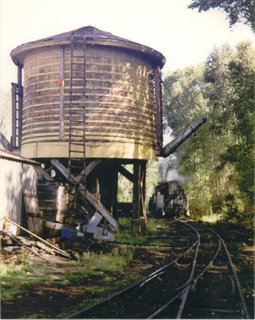
We continued along, passing such notable landmarks as the Los Pinos water tank. Yes, a tank becomes a landmark in your mind when you realize that without water from that tank, your engine wouldn't make it, and it's a long walk back to civilization.
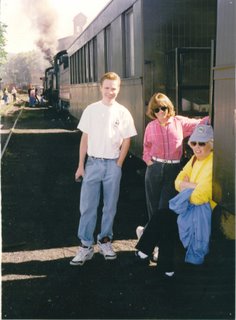
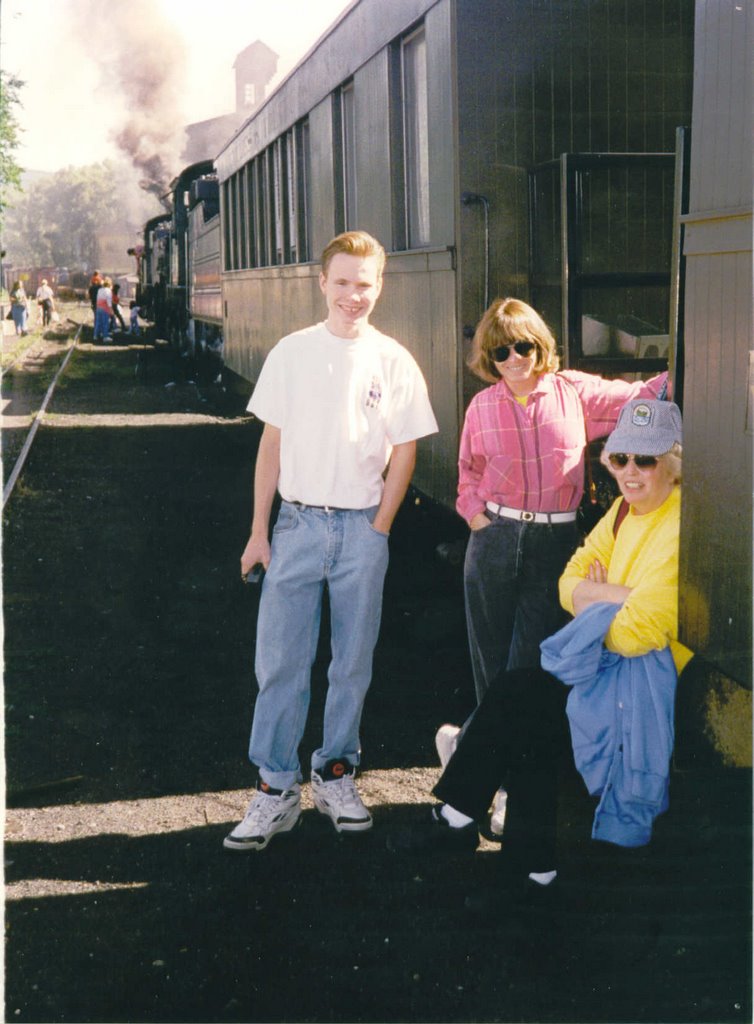
This photo is of my son, wife and sister just before departure. We had left our jackets in the car, thinking it would warm up quickly, but it was a bit colder than the photo would indicate, believe me. We decided to go get our coats before we left, and a wise decision it turned out to be, since even during summer, conditions at 10,000 feet can be quite brisk.

The passenger cars you see in this photo are not original rolling stock from Denver and Rio Grande Railroad, but are cars actually built by the employees of the C&TS RR. They did do a great job in recreating period coaches, if you aren't a tickler for details.

Our destination for the day was a small collection of buildings and sheds called Osier. Here we would have what turned out to be a very tasty and filling lunch before heading back for Chama. As you can see from the photo, just about everybody was hungry and totally filled the lunch room.


There is another run the C&TS RR makes from Antonito, Colorado, to Osier. This run lets you see both mud and rock tunnels, but you miss the Toltec Gorge. If you can make only one trip, do the one with the double-headed locomotives. Those two engines hammering their way up that 4 percent grade is a sight to remember, and hard to beat.
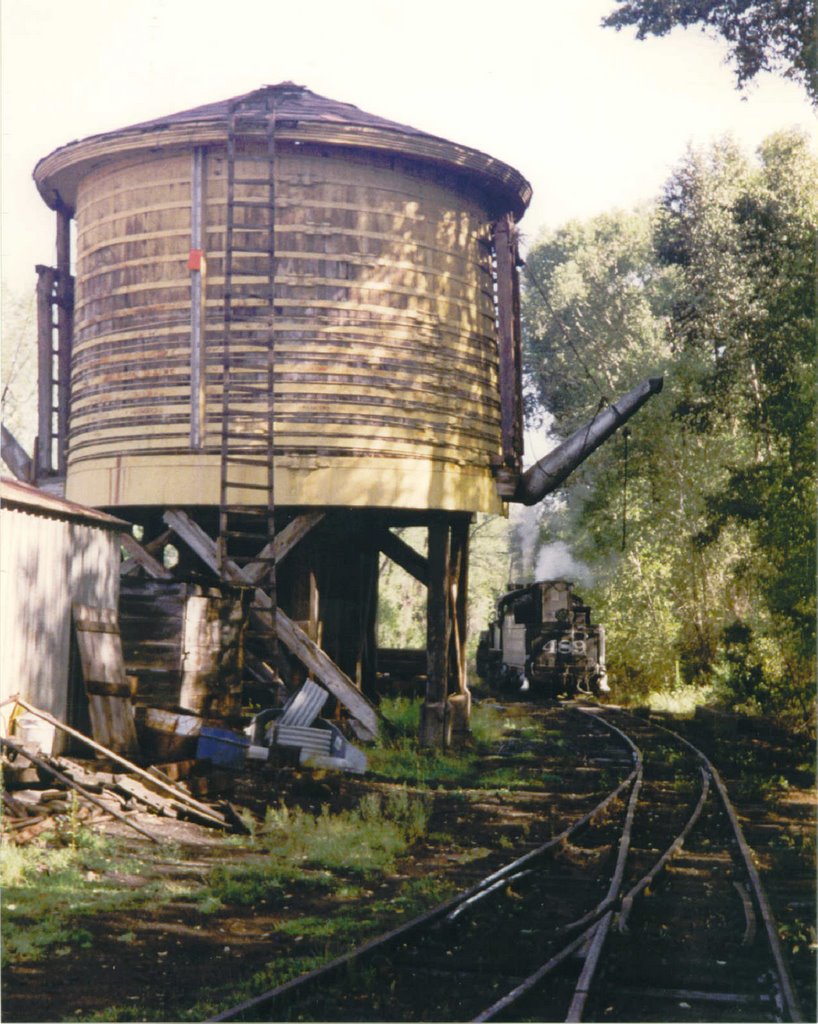
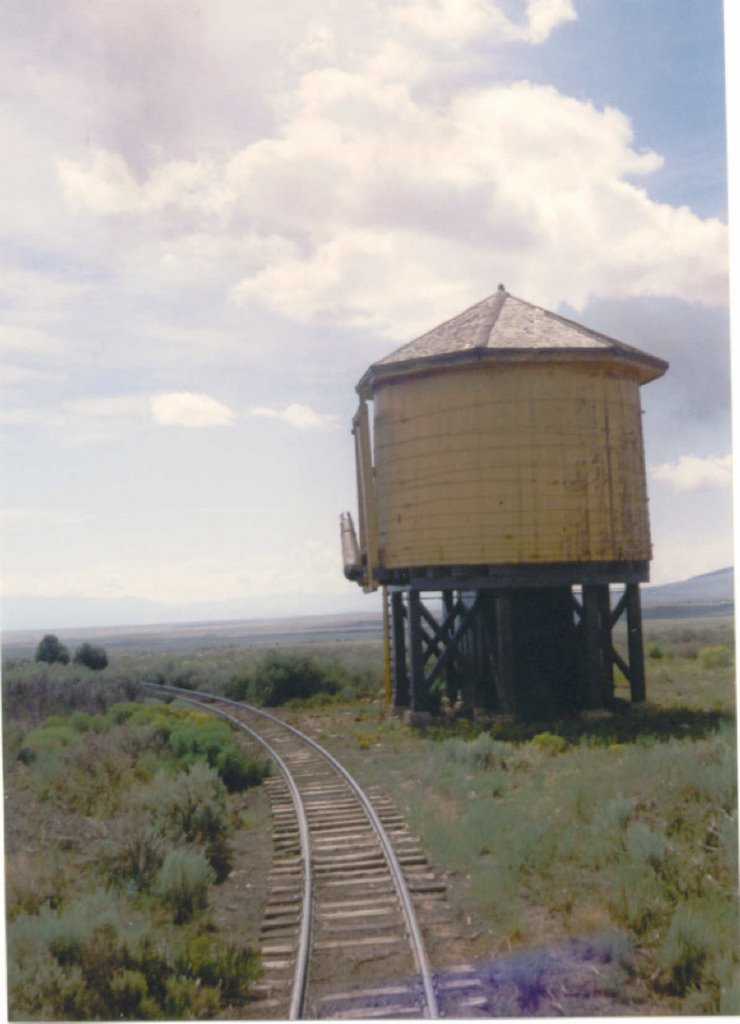
One of the last things you see when leaving Osier is this water tank. I know it's just a wooden structure, but I can't help but think that it has had a long and lonely existance for the last hundred years, with nothing but those mostly empty rails for company.